
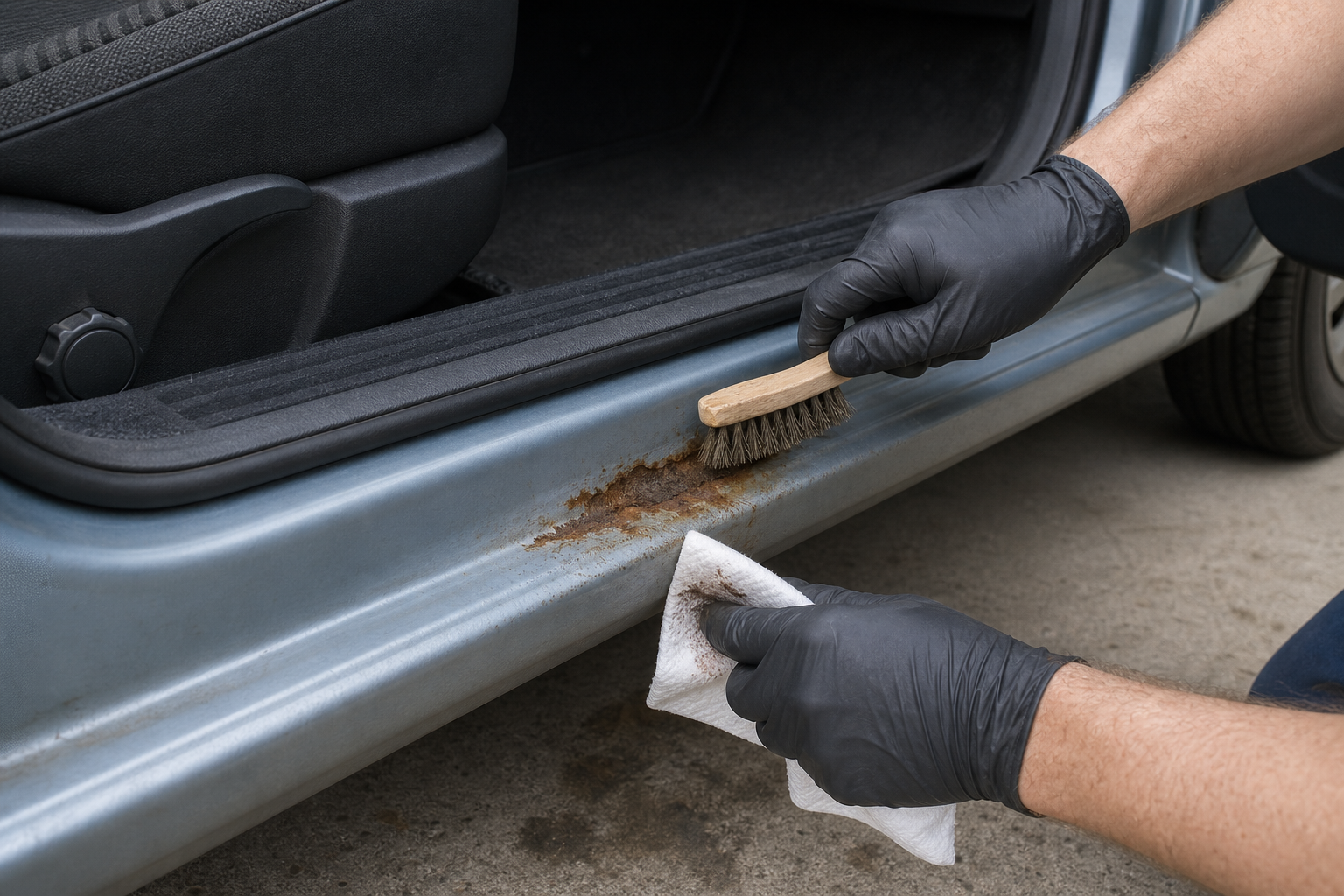
"Door sill rust" actually covers two very different problems — one you can fix yourself in an afternoon, and one that needs a bodyshop. Here's how to tell which one you're looking at.
The Two Kinds of Door Sill Rust
The confusion comes from the fact that "door sill" refers to two different layers. The sill plate is the plastic or metal trim cover you actually see and step on — rust here is cosmetic, sitting on a part that's protecting the structure underneath, not part of it. The rocker panel is the structural body panel underneath that trim, running the length of the car below the doors — rust here is a different problem entirely, because that panel contributes to the car's actual structural rigidity.
Almost everything in this article changes depending on which one you've got, so start by figuring out which layer the rust is actually on.
What Causes Door Sill Rust
The usual path: a scratch or chip — from shoes, curb strikes, loading cargo — exposes bare metal under the paint or trim finish. Road salt, rain, and general moisture then get to that exposed metal, and rust starts. It's worse in wet or coastal climates, worse on older vehicles where the factory coating has thinned, and worse anywhere grit and moisture get trapped between the trim and the sill instead of draining or drying out.
Fixing Cosmetic Rust Yourself
If the rust is only on the visible trim strip and the metal underneath is solid, this is a reasonable DIY job:
- Sand or wire-brush the rusted spot back to clean, bare metal.
- Apply a rust converter or neutralizer to stop what's left from spreading.
- Prime the bare metal, then finish with touch-up paint matched to your car.
If the trim itself is what's rusted — rather than the paint on the body — it's often simpler to just cover or replace it than to repair it. A door sill protector film installed over a cleaned, treated surface hides existing cosmetic wear and stops new scratches from starting the same cycle over again.
When It's Structural — and What That Actually Means
A few signs point to structural rather than cosmetic rust: rust-through holes you can see or feel, bubbling or flaking paint along the rocker panel itself (not just the trim strip), rust visible from underneath the car, or metal that feels soft or spongy when you press on it.
This isn't a touch-up-paint job. Structural rust needs to be assessed by a body shop — treatment usually means cutting out the affected metal and welding in a replacement section, since painting over active structural rust just traps moisture and lets it keep working from underneath. If you're not sure which category you're looking at, that uncertainty itself is a reason to get it looked at rather than guess.
Preventing It From Getting Worse
Prevention is mostly about not letting bare metal stay exposed. A few things that help:
- Cover scratches before they spread. A door sill protector acts as a barrier between your shoes and the factory finish, so new scratches happen on the film instead of the metal.
- Clear grit and road salt out of the sill area regularly rather than letting it sit and hold moisture against the metal.
- Deal with chips and scratches while they're still just exposed metal, before the first winter or wet season turns them into rust.
One thing worth being direct about: if you just want to upgrade the look of a sill that's otherwise structurally fine, LED door sills sit cleanly on top of your existing trim with no adhesive or drilling. That's a cosmetic upgrade, not a rust fix — it won't stop or hide active structural rust, and it isn't meant to. See the Complete Guide for the full install and fit details.
For the other questions people ask about door sills — what they're called, whether they're necessary, how they get damaged day to day — see the Door Sill FAQ.